
Uit onderzoek is gebleken dat de gemiddelde vrouw zo’n 72 dagen spendeert aan het scheren van bijvoorbeeld haar benen. Dat is behoorlijk veel tijd die je doorbrengt in de badkamer. En wat dacht je van de hoeveelheid scheermesjes en wax strips die hiervoor worden gebruikt en de kosten hiervan? Dit is natuurlijk best zonde van je tijd als er ook andere mogelijkheden zijn om van al die ongewenste haartjes af te komen. IPL ontharen is bijvoorbeeld een techniek om op een veilige en hele effectieve manier te ontharen. Zeker wanneer jij graag geniet van een langdurige zachte en vooral haarvrije huid het hele jaar door.
Wat is IPL ontharen nou eigenlijk?
IPL ontharen staat voor Intense Pulsed Light, of ook wel intens gepulseerd licht genoemd. Kortom, een behandeling waarbij er lichtpulsen op je huid worden toegepast. Dit is een methode om door middel van lichtenergie, de haarzakjes op te warmen. Doordat het de haarzakjes opwarmt, zullen deze hierdoor de rustfase activeren en de haarzakjes beschadigen. Het resultaat? De haren zullen uitvallen en groeien niet meer terug. Dit gebeurd niet direct, maar kan zo’n 2 weken duren. Ook kun je het idee hebben dat je haren nog doorgroeien, maar dit zijn enkel de haren die uit de wortel worden geduwd. Je zal mogelijk tussentijds dus nog wel moeten scheren. De behandeling is pijnloos en zacht voor je huid. Om het gewenste resultaat te bereiken, zijn er gemiddeld 9 behandelingen nodig.
Is IPL ontharen voor iedereen geschikt?
IPL ontharen is in principe geschikt voor iedere huid. Of je nu een hele lichte huid, of juist een donkere huid hebt, met IPL kan de huid effectief behandeld worden. Wel moet er rekening gehouden worden met het gebruik van bepaalde medicijnen. Tijdens zwangerschap of na een recente operatieve ingreep raden wij een IPL behandeling af. Verder is het van belang om niet te zonnen en geen gebruik te maken van de zonnebank. Dit om pigmentvlekken en schade op de huid te voorkomen.
Hoe verloopt een gemiddelde IPL behandeling?
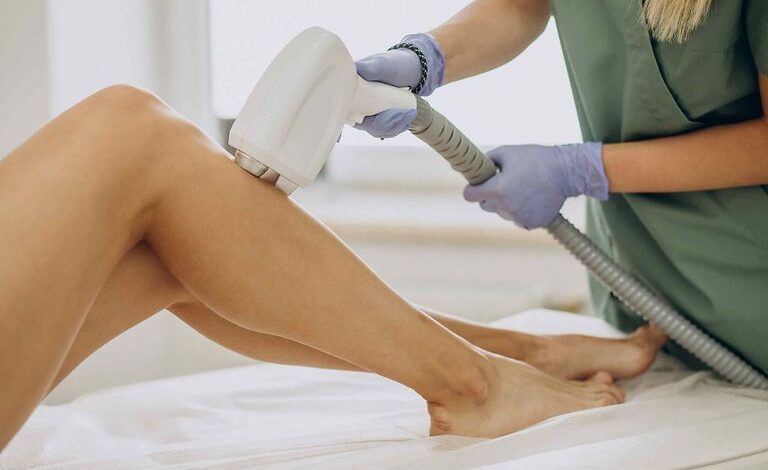
Het is belangrijk om voorafgaand aan het IPL ontharen het te behandelen gebied geschoren te hebben, dit kun je zelf kunt doen of bij de salon waar jij de behandeling laat doen. De specialist zal de IPL behandeling specifiek afstemmen op jouw individuele kenmerken zoals bijvoorbeeld je huids- en haarkleur. Dit is geen algemene behandeling die voor iedereen hetzelfde is. De behandelaar zal een koele contactgel aanbrengen waarna een hiervoor speciaal opgeleide specialist de lichtpulsen op je huid zal geven. De IPL behandeling is geheel pijnloos. Wat fijn is, is dat ook na de behandeling geen irritatie of pijn ontstaat. Ongeveer 2 tot 3 weken na de behandeling is het eerste resultaat zichtbaar.
Is IPL ontharen definitief?
IPL zorgt ervoor dat het haarzakje wordt uitgeschakeld, maar niet wordt verwijderd. De haarzakjes worden in een zogenoemde ruststand gebracht wat soms wel 10 jaar kan duren, waardoor er geen haargroei meer zal plaatsvinden. Het is mogelijk dat onder invloed van hormonen de haargroei weer gestimuleerd wordt en dat er toch weer wat haartjes terugkomen op behandelde plekken. Haar kan zich jarenlang in een slaapfase bevinden en dan na een jaar of 10 ineens weer groeien. Het zal dan wel om een beperkt aantal haren gaan welke na 1 of 2 behandelingen alsnog definitief verdwijnen.